


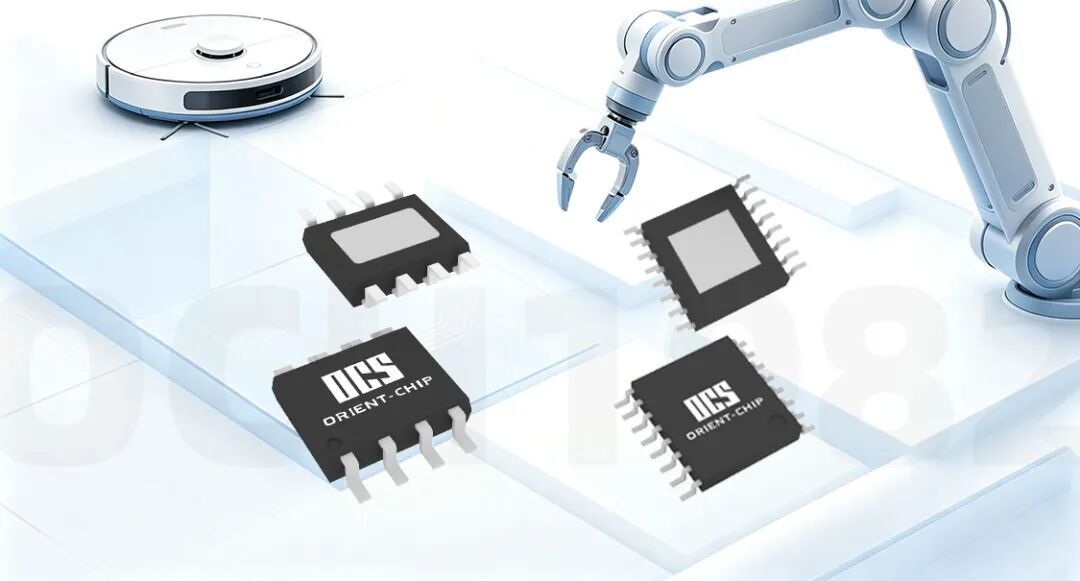
OCS launches the all-new generation of high-precision magnetic encoder position sensors, the OCH1982


In application scenarios such as industrial automation, robot joint control, closed-loop stepper motor drives, and BLDC motor drives, the precise detection of angular position directly determines system performance and operational reliability. For many years, the high-end magnetic angle sensor market has been dominated by foreign brands, leaving domestic companies facing numerous challenges in component selection, cost, and supply-chain assurance. To meet growing localized demand, OCS has continued to strengthen its presence in the magnetic sensor market. Following the automotive-grade OCH1981, OCS is now officially launching the next-generation high-precision position-sensing sensor chip, OCH1982, which offers a broader range of output modes, greater flexibility, and higher accuracy, providing another highly competitive solution for both industrial and consumer markets.
• Wide operating voltage range: 3.0–5.5 V • Wide operating temperature range: –40 °C–150 °C (stable operation in various harsh high-and low-temperature environments)
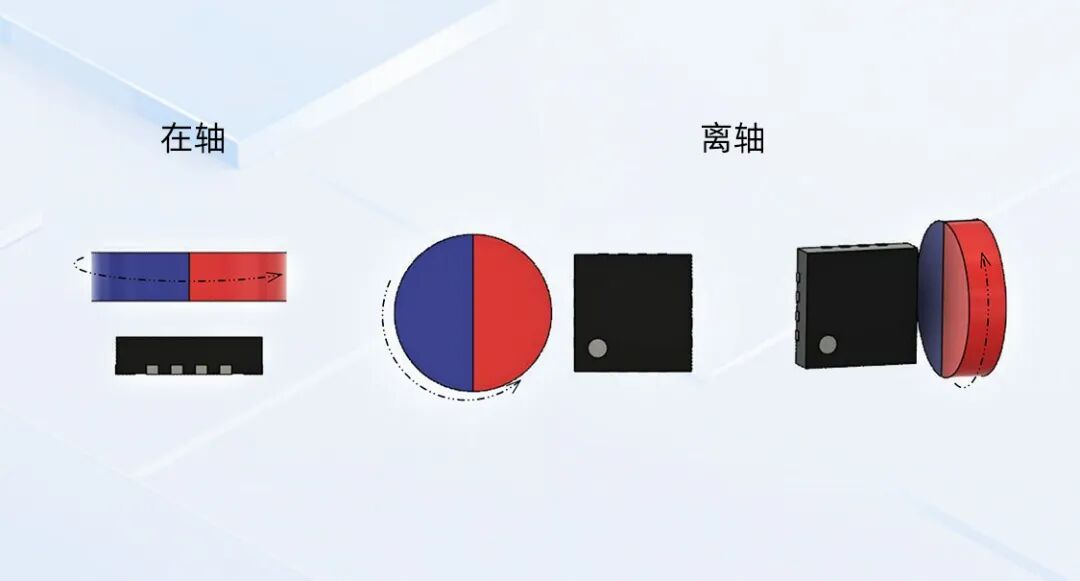
• Multi-plane detection: Supports magnetic fields in XY, XZ, and YZ planes; flexible mounting options for both off-axis and on-axis configurations
• Ultra-high resolution: 16-bit absolute angle output (SPI/I2C), 14-bit SSI output, and 12-bit PWM output
• Rich incremental output: ABZ output from 1 to 16,383 pulses/revolution, programmable and adjustable; high-resolution output with support for ABZ differential anti-interference output mode (QFN3030-16L package)
• UVW output: Supports 1–16 pole pairs/revolution, programmable configuration (compatible with BLDC motor commutation control)
• Multi-communication interfaces: 4-wire SPI, I2C, and SSI; supports register read/write and EEPROM programming
• Independent switch output (SWO): Programmable switch points and hysteresis windows for precise position triggering
• High-speed response: Supports up to 60,000 e-rpm; supports 24M high-speed SPI communication and 1M high-speed I2C communication
• High precision: Default factory precision is ±1; achieves 0.1 after offline calibration
• Comprehensive offline calibration resources: Supports calibration during non-uniform and uniform-speed operation; calibration parameters are automatically generated via an internal algorithm, requiring no additional manual intervention
• Two packaging options: QFN3030-16L and SOP-8L packages to meet the needs of different application scenarios
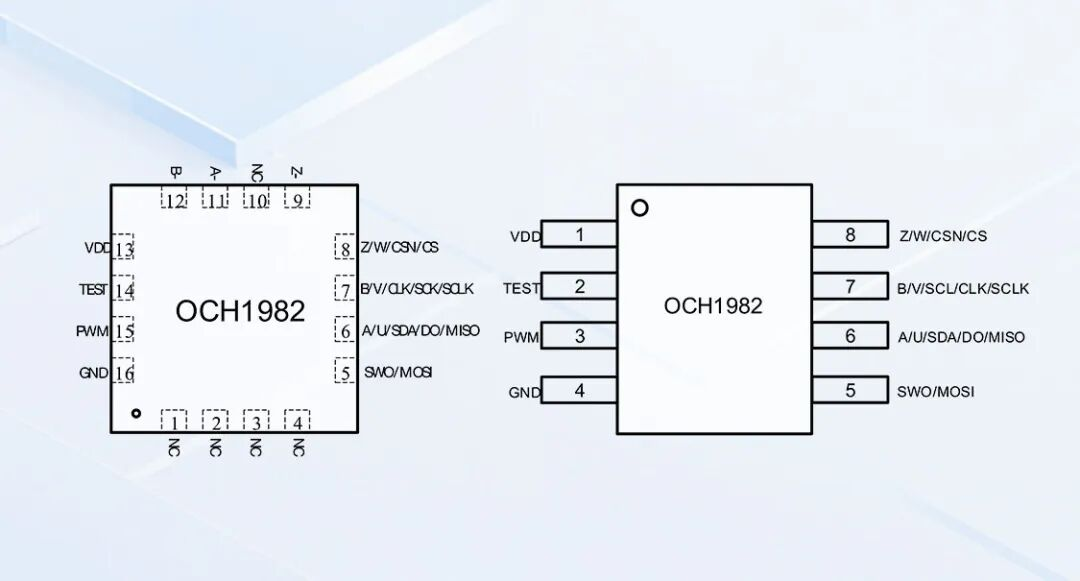
OCH1982 Package Schematic
Suitable for a variety of applications, offering greater installation flexibility
In practical engineering applications, sensors face stringent requirements regarding their mounting structures. Traditional AMR (An-isotropic Magneto-resistance) sensors are typically capable of detecting only a single-plane magnetic field; consequently, they often prove inadequate in scenarios where limited space is available at the rear of a motor, necessitating off-axis mounting on the side. OCH1982 leverages advanced horizontal Hall + IMC technology to completely overcome structural limitations. It supports magnetic field detection across three planes: XY, XZ, and YZ. This means that whether the magnet is positioned directly above the chip (on-axis) or placed on the side (off-axis), OCH1982 can accurately capture the sinusoidal and cosine variations of the magnetic field angle, enabling precise detection of angular positioning.
High-precision control for more reliable operation
The manufacturing accuracy error of OCH1982 is controlled within ±1, and it supports offline calibration to align with the user's configuration and application environment. After offline calibration, the accuracy can be reduced to ±0.1, with angular noise as low as 0.01 rms. Whether for low-speed, high-precision positioning or real-time feedback during high-speed rotation, the system ensures stable and reliable angular data.
With a wide range of interfaces, it enables broader application scenarios.
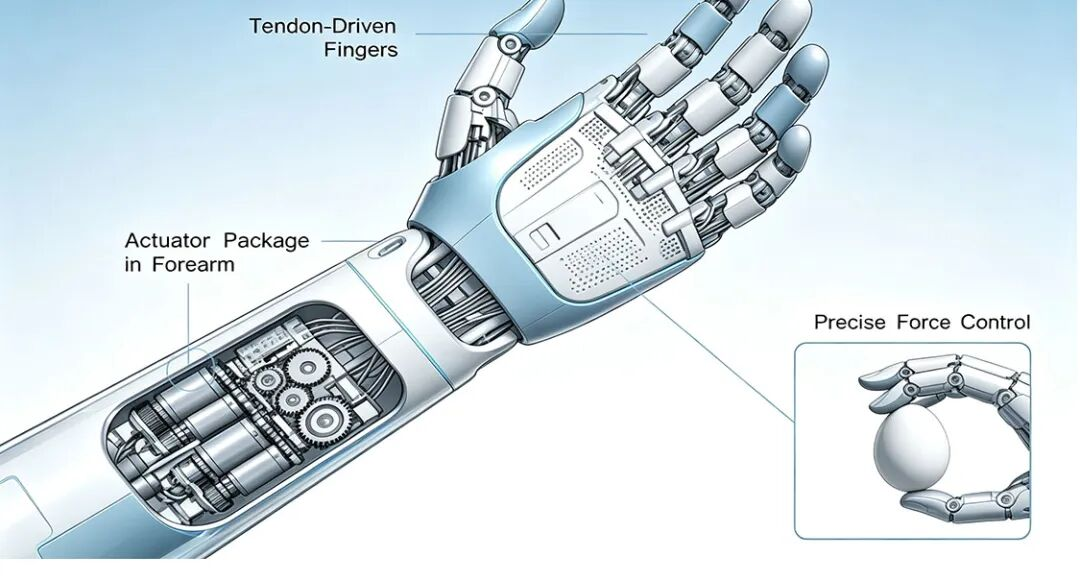
Typical application: collaborative robot joint module
Collaborative robots impose extremely stringent requirements on joint torque control and low-speed smoothness. OCH1982, with its extremely low angular noise and latency, provides the FOC algorithm with exceptionally clean position and velocity feedback, effectively suppressing "creeping" jitter in the robotic arm during low-speed operation; combined with its off-axis mounting capability, it perfectly meets the spatial constraints of joint motor modules.
Typical Application: Closed-Loop Stepper Motor with High-Speed Silent Drive
Open-loop stepper motors are prone to step loss, which can cause equipment to malfunction. The OCH1982's multi-output functionality enables high-precision absolute position detection via SPI/SSI/I2C, as well as incremental relative position control through high-resolution ABZ outputs; this provides closed-loop stepper drives with a wide range of control options and, by leveraging the OCH1982's high-precision position feedback signal, enables precise position feedback.
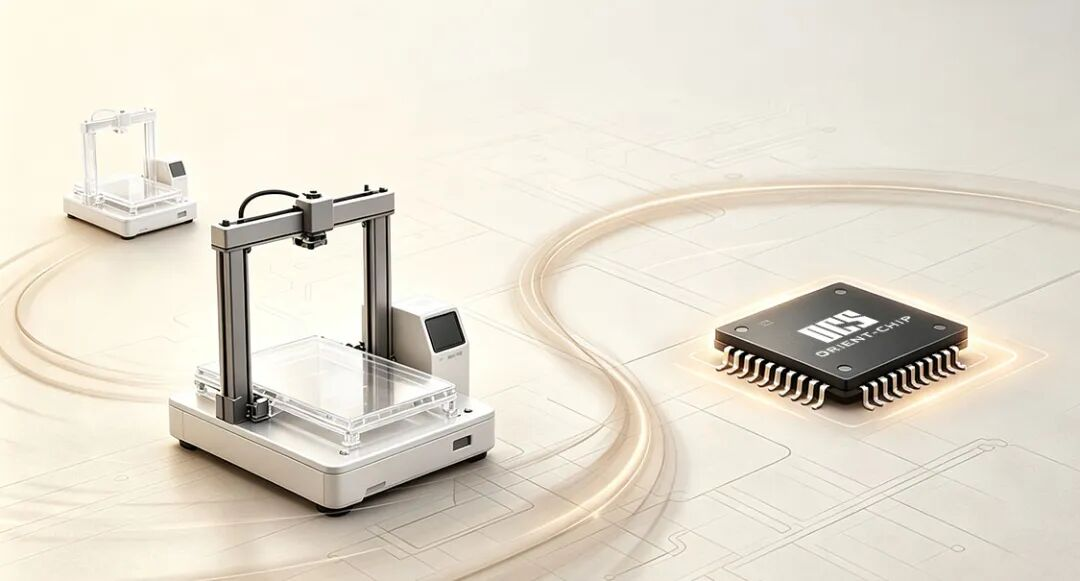
Typical application: stage lighting and pan-tilt control
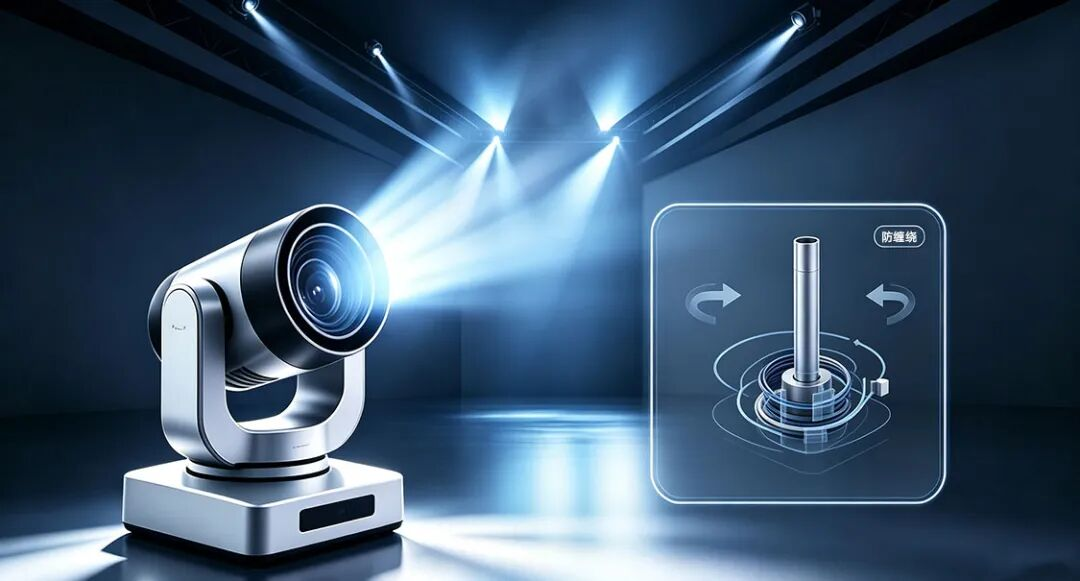
For stage lights requiring unlimited rotation, the ABZ output of the OCH1982, combined with the SWO digital switch, enables real-time transmission of horizontal and vertical angles while precisely controlling mechanical limits, preventing cable entanglement, and thereby ensuring more stable and visually striking stage performances.
From compact joint modules to high-speed precision machining equipment, OCH1982 leverages its versatile adaptability to address diverse structural and control challenges. In the future, OCS will continuously iterate its magnetic encoder sensing technology, empowering motion control systems across various industries with highly competitive domestic chips, thereby providing superior core sensing solutions for domestic substitution initiatives.

