


OCS officially launches the 3D linear Hall sensor OCH1973FVAD


Tactile sensation is a critical channel through which the human body acquires information about its external environment. Leveraging the dense array of tactile receptors distributed across the fingertips, humans can perceive an object's shape, texture, and temperature, and precisely regulate the force of grasping—from lifting a fragile egg to carrying a heavy backpack. This "sense of分寸" represents a key capability bottleneck that contemporary robotics systems urgently need to overcome.
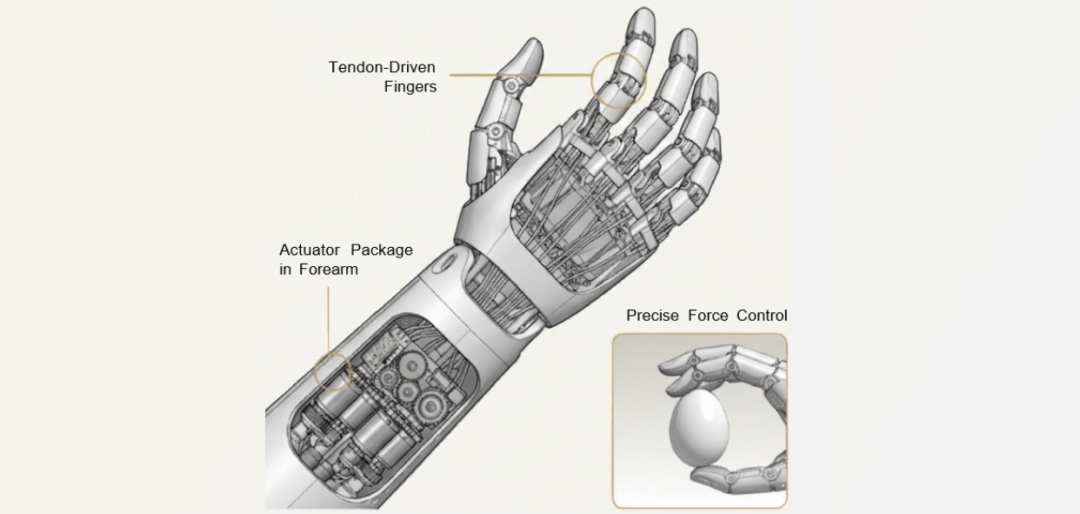
Flexible electronic skin enables machines to provide human-like tactile feedback by covering the robot surface with a flexible, stretchable sensing layer. In recent years, magnetic tactile sensors have become a prominent research focus in the field of electronic skin due to their unique advantages, including non-contact measurement, no mechanical wear, high dynamic response, and ease of large-area coverage. OCH1973 is a three-dimensional magnetic tactile sensor specifically designed by OCS for robotic flexible skin; it employs an IMC Hall + magnet structure to achieve synchronous detection of forces along the XYZ three axes.
core advantage:
Single-chip integration of three-axis magnetic field detection, eliminating the need for three separate chips.
Equipped with a built-in offline compensation algorithm to perform calibration for nonlinearity, temperature drift, and inter-axis coupling within the factory environment.
Ultra-compact packaging (1.2*0.9*0.37 mm) is designed to fit the confined space of a fingertip.
When deployed in a 2×2 or 3×3 array, the system can effectively mitigate interference from external magnetic fields while enabling three-axis sensing. Application scenarios: multi-finger coordinated grasping, precision object manipulation, force–position hybrid control, and haptic feedback-based human–machine interaction on the skin of a robot's dexterous hand.

Joint motor:
Precise 3D magnetic field sensing enhances servo reliability
OCH1973 utilizes IMC Hall technology to simultaneously measure magnetic field components in the X, Y, and Z directions, enabling precise detection of complex 3D motion—including rotation and linear displacement. By mounting magnets on the joint motor shaft and using a 3D Hall sensor for real-time detection of the magnetic field orientation, the system performs non-contact measurement based on magnetic field variations, eliminating wear and friction at the source and thereby significantly extending service life and reliability. It offers strong tolerance for variations in magnet mounting position and supports flexible configurations such as off-axis installation, which simplifies mechanical design; a precision signal chain and an integrated 16-bit ADC enable high-precision motion detection.

CE(Consumer Electronics)
The OCH1973 is a high-precision linear 3D Hall-effect sensor suitable for a wide range of industrial and consumer electronics applications. It incorporates a built-in CORDIC algorithm and supports 8-bit absolute angle output, eliminating the need for MCU resources for computation while enabling both axial and off-axis compensation, thereby eliminating assembly-related tolerances and facilitating the implementation of off-axis solutions. It also supports 3-axis programmable switching, button detection, and interrupt wake-up functionality, reducing system power consumption. The OCH1973 features an ultra-thin DFN1209-5L package with dimensions of only 1.2 mm × 0.9 mm × 0.37 mm, fully meeting the stringent demands of consumer electronics for miniaturization and high integration.
Consequently, it can be widely applied to rotational-angle detection, for example, in applications involving crown knobs, mouse scroll wheels, VR headsets, and similar devices.

